
Everyone agrees technology matters, but nobody agrees where to begin.
Tools & Assessments
Tools that help people think through difficult technology decisions.
We build assessments and decision models for situations where the discussion has become more complicated than the decision itself.
Leaders are rarely short of information. The problem is that the information often sits in different places and answers different questions.
Assessments
Decision models
Frameworks
Executive briefs
Why these tools exist
Why these tools exist.
A good tool does not make the decision for you. It helps you see what is missing.
Our tools bring assumptions, readiness, opportunity and constraints into the same conversation.
Which situation sounds familiar?
A tool can help when the conversation keeps moving but the decision does not.
An AI initiative is moving faster than organizational readiness.
Dashboards provide more information but less confidence.
Platform discussions are happening before the business problem is clear.
Several opportunities appear valuable, but priorities remain unclear.
Featured public assessment
AI Opportunity Mirror
A quick, plain-language AI readiness check that shows where AI may already be creating value, what could hold it back and where capability may spread next.
01
Looks at AI reach through real work rather than licences or general awareness.
02
Highlights whether useful methods travel or stay concentrated with a few people.
03
Shows bottleneck risk, opportunity spread and a practical next move in plain business language, without pretending to replace a detailed readiness review.
Designed for
CXO & founders
HR & L&D
Data & AI teams
Business functions
Start the Assessment →
Decision model
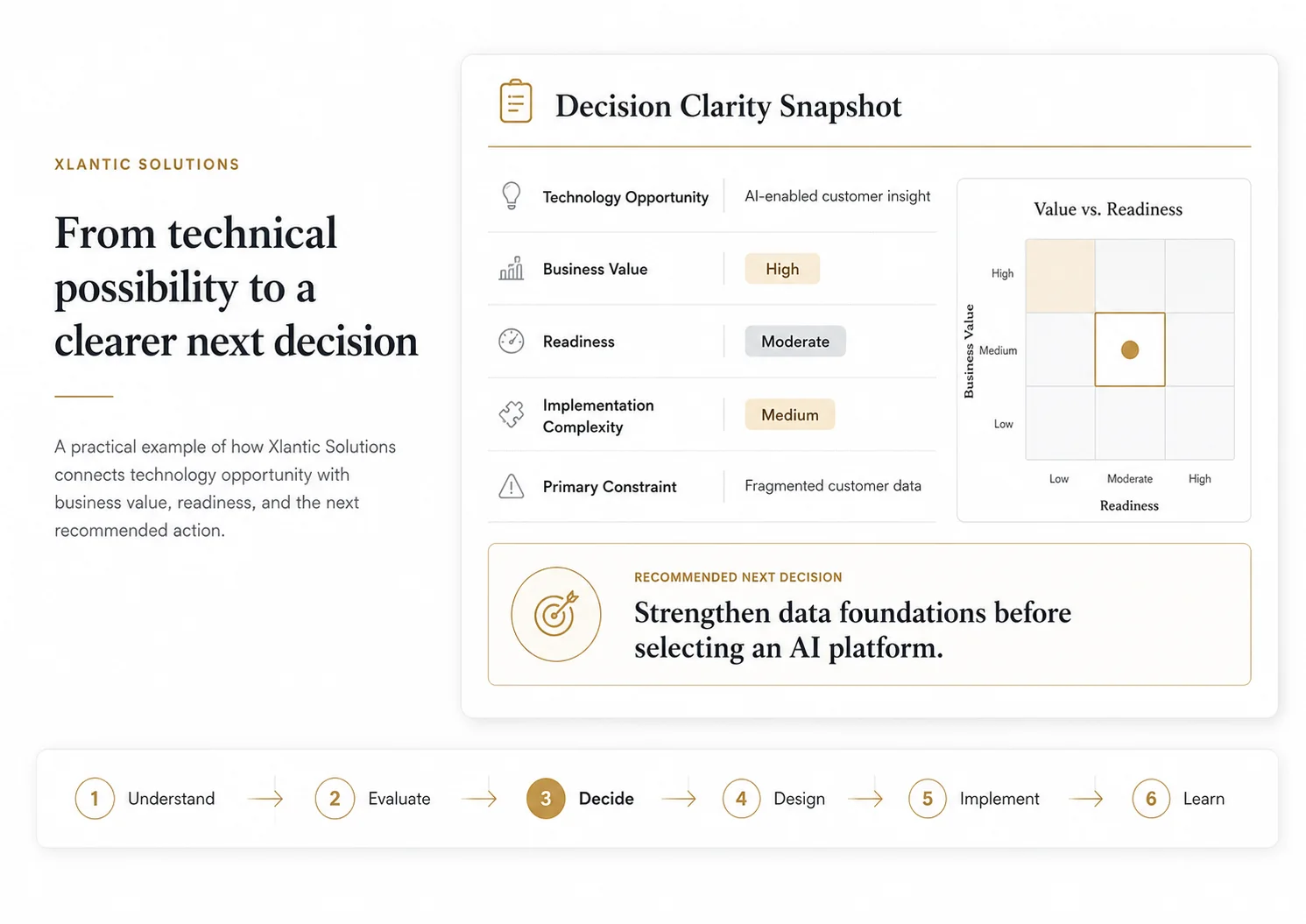
Decision Clarity Snapshot
A single view of the opportunity, business value, readiness, difficulty and next step.
It is useful when the discussion starts with a platform or trend before anyone has agreed on the business decision.
The model does not tell leaders what to buy. It shows what needs to be true before they commit.
Useful for
Platform selection
AI opportunity review
Technology investment
Executive discussion
Interactive research view
Touchpoint Influence Density Index
Compare how observed activity, engagement, opportunity presence, buyer feedback and sales-confirmed influence change across the buying journey.
The view is based on an internal assessment of one in-house B2B project. It is designed for comparison and advisory discussion, not as a market benchmark.
Available now
Open the Index →
Choose the situation: not the tool name
Choose the question before choosing the tool.
The right format depends on the question, not on how impressive the framework sounds.
I need to understand readiness
Is the organization prepared to use the technology well?
I need to make a decision
How should the opportunity be evaluated before commitment?
I need to improve performance intelligence
Why is more data not producing clearer action?
What makes a Xlantic Solutions tool useful
A tool earns its place only when the conversation improves.
It makes the issue easier to see
It should reduce confusion without hiding the factors that matter.
It brings assumptions into the open
People can see what is being assumed and what the decision depends on.
It links the technology to the business
The technology is considered alongside value, risk, work practices and customer impact.
It leaves a clear next step
The output should help someone decide what to explore, improve, delay or reject.
What you should leave with
A useful tool should leave the next conversation in a better place.
The result should be easy to explain and useful enough to guide a real decision.
01
What problem is actually being solved?
02
What is the opportunity worth?
03
What is not ready yet?
04
Which risk or constraint matters most?
05
What decision should happen next?
Bring us the decision you’re struggling with